
What is Physical AI?
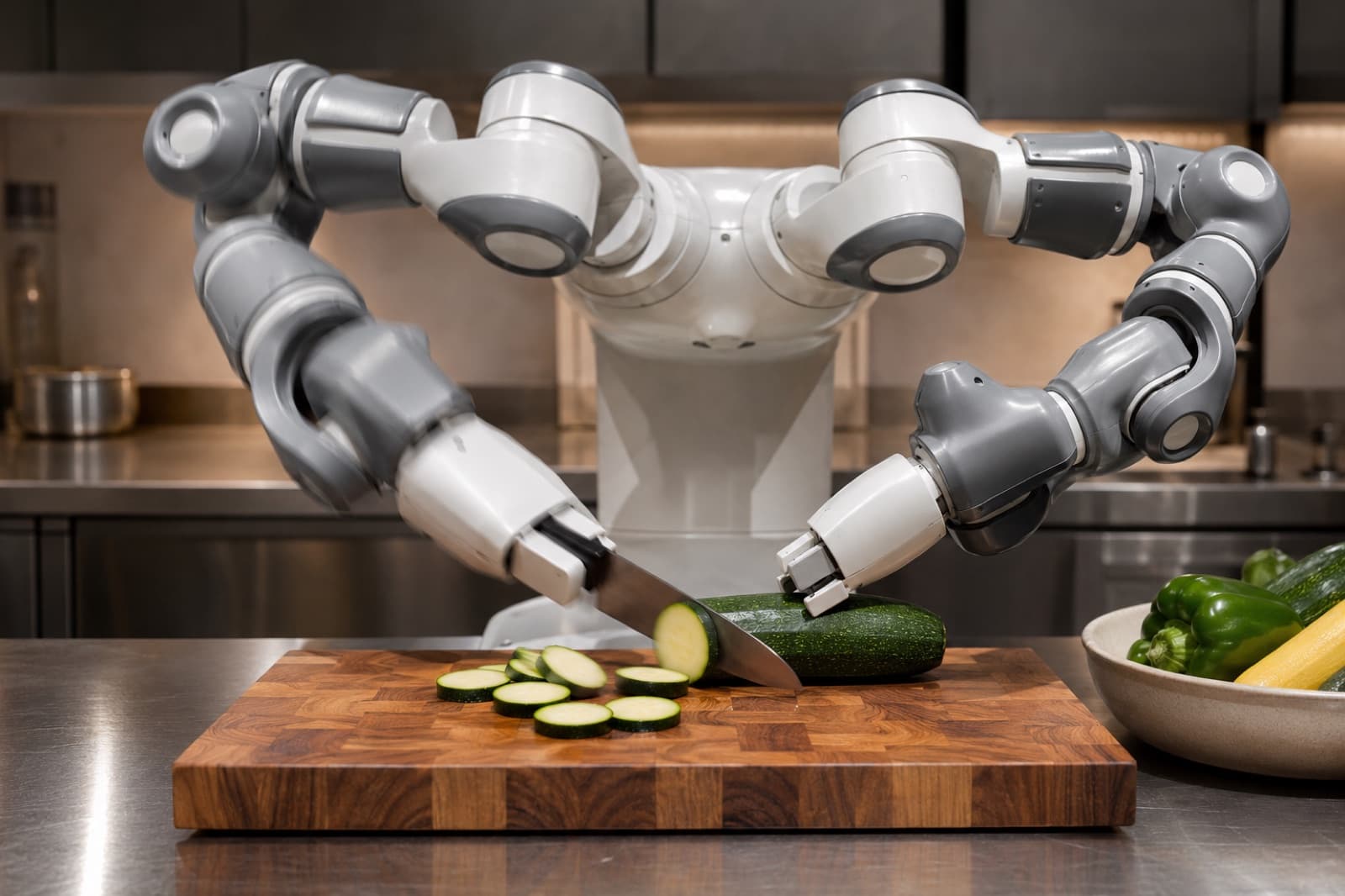
Physical AI is artificial intelligence that perceives and acts in the real world through a body. Robotics is where it gets hard, and imitation and reinforcement learning are how it gets built.
The short version
- Physical AI is AI that senses and acts in the physical world, cameras and force sensors in, motor commands out, rather than only reading and writing digital data.
- Robotics is the hardest and most important instance of it, because a robot has to close the loop between perception and action under real physics, in real time, with no undo.
- Imitation learning and reinforcement learning are how the behavior is acquired: one clones human demonstrations, the other optimizes a reward, and most real systems use both.
The last decade of AI mostly happened on screens. Models learned to predict the next word, label an image, or rank a feed, tasks where the input is a file and the output is text or a number. Physical AI is the shift to systems that operate in the world instead of describing it. The inputs are live sensor readings, camera frames, joint angles, force and torque, and the outputs are commands that move actuators and change the physical state of things. When Jensen Huang called physical AI “the next frontier” at CES 2025, this is the distinction he was drawing: not AI that talks about the world, but AI that acts in it.
What “Physical AI” actually means
Physical AI is close to a synonym for embodied AI: intelligence expressed through a body that occupies space and obeys physics. The term leans toward the engineering and commercial reality, the robots, vehicles, and machines being deployed, rather than the cognitive-science question of what embodiment means. What makes it distinct from classical automation is generalization. A traditional industrial robot repeats a pre-programmed trajectory and breaks the moment the part moves two centimeters. A physical-AI system learns behavior from data, so it can, in principle, handle variation it was never explicitly programmed for, the same way a language model handles a sentence it never saw in training.
Why robots are the hard case
A chatbot that hallucinates produces a wrong paragraph. A robot that misjudges a grasp knocks a glass off the counter. Physical AI has to work in a setting that is unforgiving in ways digital AI is not. It runs a closed perception-to-action loop: every action changes what the robot senses next, so errors compound instead of staying local. It deals with contact and dynamics, friction, momentum, deformable objects, that are hard to model and harder to simulate perfectly. And it operates with no reset: on real hardware there is no free retry, every attempt costs time, wear, and sometimes a broken object. That is why progress in physical AI is gated less by model architecture than by data and the loop that produces it.
Imitation learning: learning from demonstration
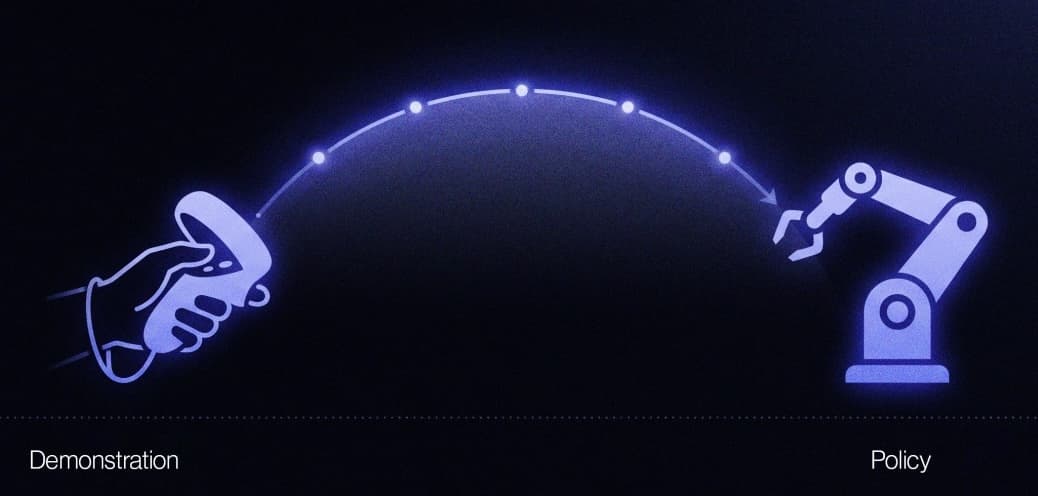
The fastest way to give a robot a skill is to show it. In imitation learning, a person teleoperates the robot through a task, and each attempt becomes a stream of observation-action pairs the model learns to reproduce. It is supervised learning applied to behavior: given what the robot sees, predict what to do next. Because every frame is a labeled example of the right move, a competent pick-and-place skill can emerge from a few hundred good demonstrations, with no reward to design and no flailing exploration. This is why almost every working physical-AI system starts here, and why how you collect demonstrations matters so much, the policy can only be as good as the behavior it was shown.
Reinforcement learning: learning from reward
Imitation can’t exceed its demonstrations, and it gets brittle the moment the robot drifts into a state no human demonstrated. Reinforcement learning attacks the long tail from the other direction: instead of copying a human, the policy tries actions, observes outcomes, and shifts toward whatever earns reward. Because the signal comes from the environment rather than a fixed dataset, an RL policy can discover behaviors nobody showed it and, in principle, surpass human performance on the metric you defined. The cost is exploration, thousands of rollouts, careful reward design, and usually a heavy dose of simulation to make all that trial and error affordable.
How they fit together
In practice you don’t choose. The dominant recipe for physical AI is to pre-train with imitation learning and fine-tune with reinforcement learning: clone demonstrations to get a policy that behaves sensibly on day one, then use reward to grind down the stubborn failure modes imitation can’t reach. Starting RL from a good imitation policy also sidesteps its worst problem, early random exploration, because the robot already acts reasonably from the first rollout. The vision-language-action models driving the current wave of robot foundation models are trained exactly this way: broad imitation pre-training on diverse demonstrations, followed by task-specific fine-tuning. For the full comparison, see imitation learning vs. reinforcement learning.
From concept to a working system
Physical AI is less a single model than a loop: collect demonstrations, train a policy, deploy it to a robot, watch where it fails, and feed those failures back as new data. Every step references the same robot, the same dataset, and the same versioned model, otherwise you can’t tell whether an improvement came from more data, a new reward, or a new architecture. That is the whole argument for running physical AI on one platform. Neuracore is built around that loop: ingest demonstrations from any teleoperation rig, train manipulation policies with imitation and reinforcement learning, deploy them to real hardware, and version the entire path from the first demonstration to the deployed skill.
More on building robot skills.
Imitation learning vs. reinforcement learning
When to clone demonstrations, when to reward-optimize, and why most policies use both.
Read the article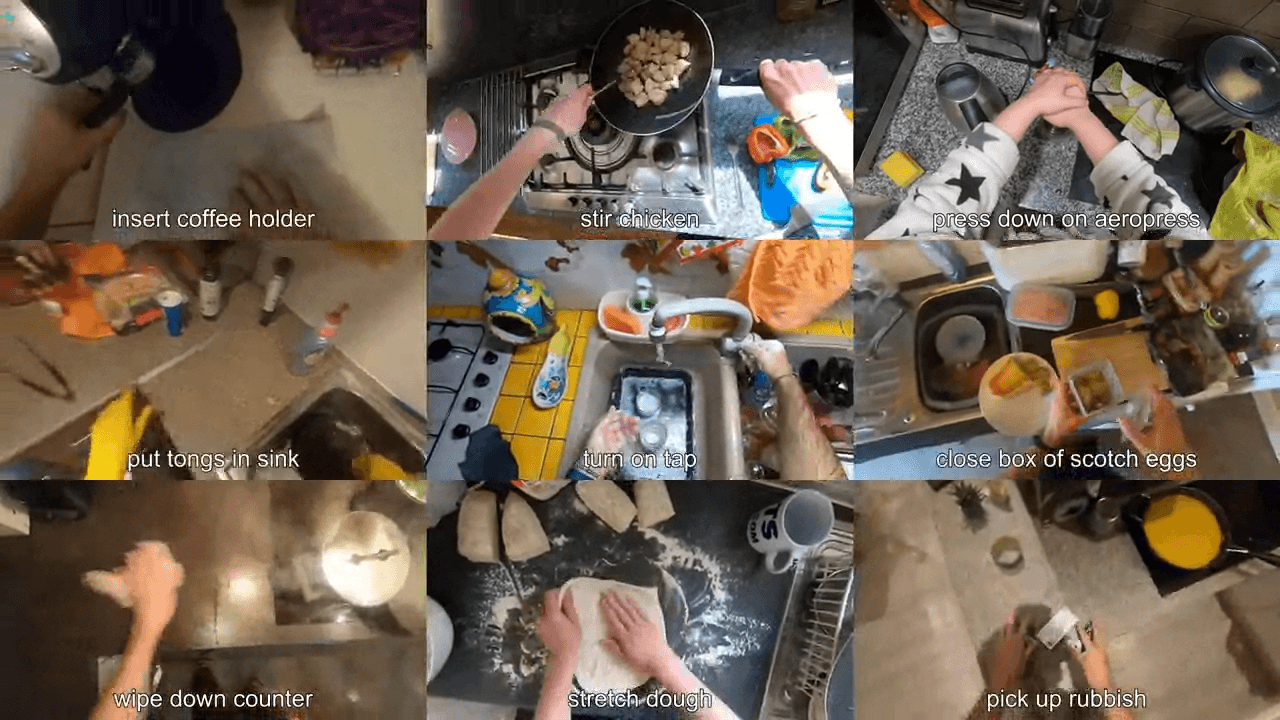
What is a Vision-Language-Action (VLA) model?
How VLA models map camera frames and language instructions straight to robot actions, and where they fit.
Read the article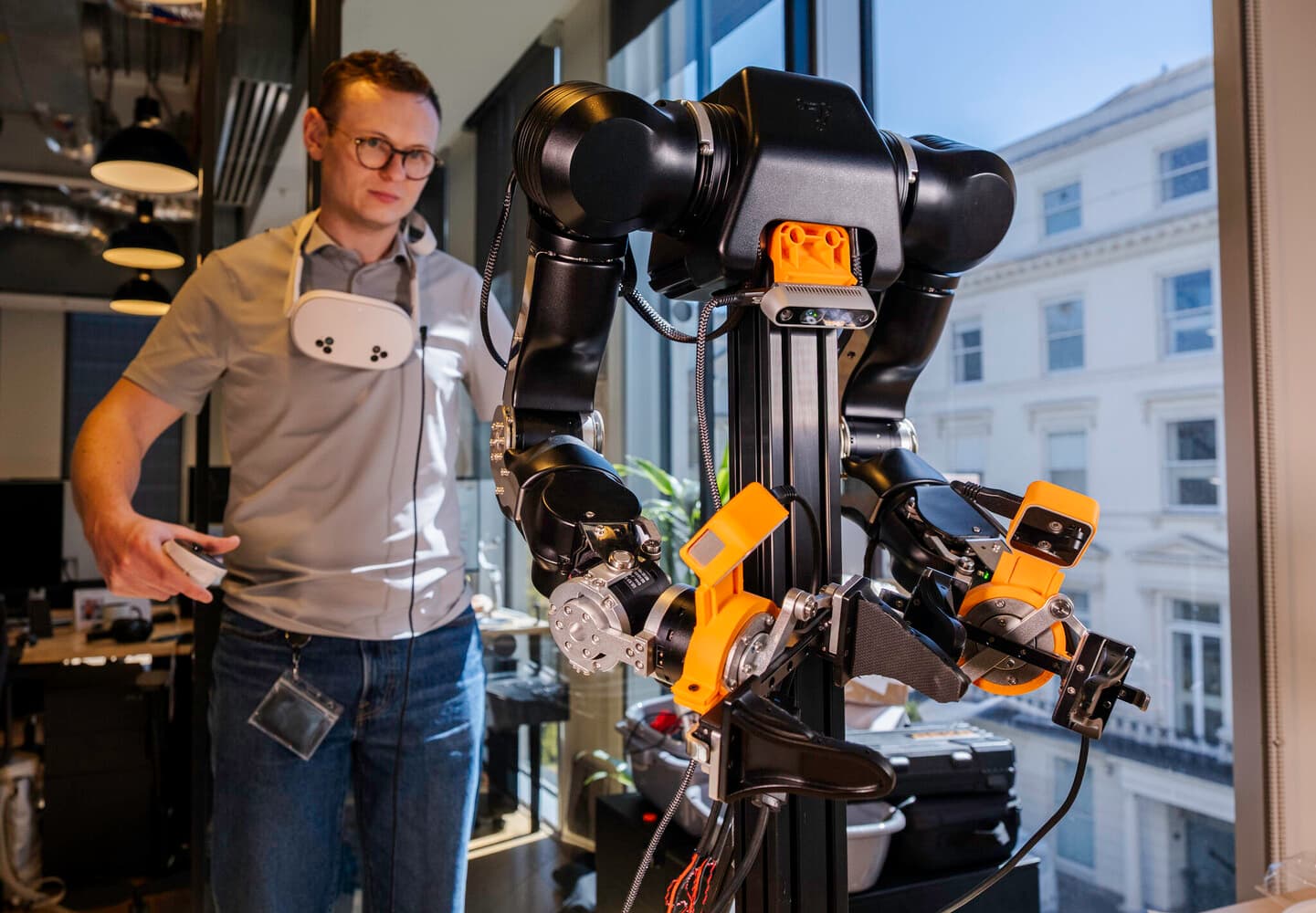
How robot data collection actually works
Teleoperation rigs, what a demonstration actually records, and how to keep the data trainable.
Read the articleBuild physical AI on real robots.
Neuracore takes you from teleoperated demonstrations to a trained, deployed manipulation policy, with imitation learning and reinforcement learning on the same versioned data.