How robot data collection actually works
Teleoperation rigs, what a demonstration really records, and how to keep the data clean enough to train on.
The short version
- A demonstration is a time-synchronized recording of what the robot saw and what it did, cameras, proprioception, and actions, aligned.
- Most robot training data comes from teleoperation: a human drives the robot through the task.
- The hard part isn’t recording, it’s keeping the data synchronized, labeled, and clean enough to train on.
Every learned robot skill starts as data, and for manipulation that data is almost always demonstrations. Before you train anything, someone has to show the robot what to do, repeatedly, across enough variation to matter. Teleoperation data collection is how that happens, and understanding what it produces explains a lot about why some datasets train great policies and others quietly poison them.
What a demonstration records
A single demonstration is a short episode, usually a few seconds to a minute, captured as several synchronized streams. There’s vision: one or more camera feeds, often a wrist camera plus an overhead or front view. There’s proprioception: the robot’s own joint positions, velocities, and gripper state at each timestep. And there’s the action: the command sent at each step, the target the policy will later learn to predict. The critical property is alignment: every stream must share a clock, so that the action at time t lines up with exactly the observation that preceded it. A few milliseconds of drift between camera and action turns a clean demonstration into a subtly mislabeled one.
How teleoperation rigs work
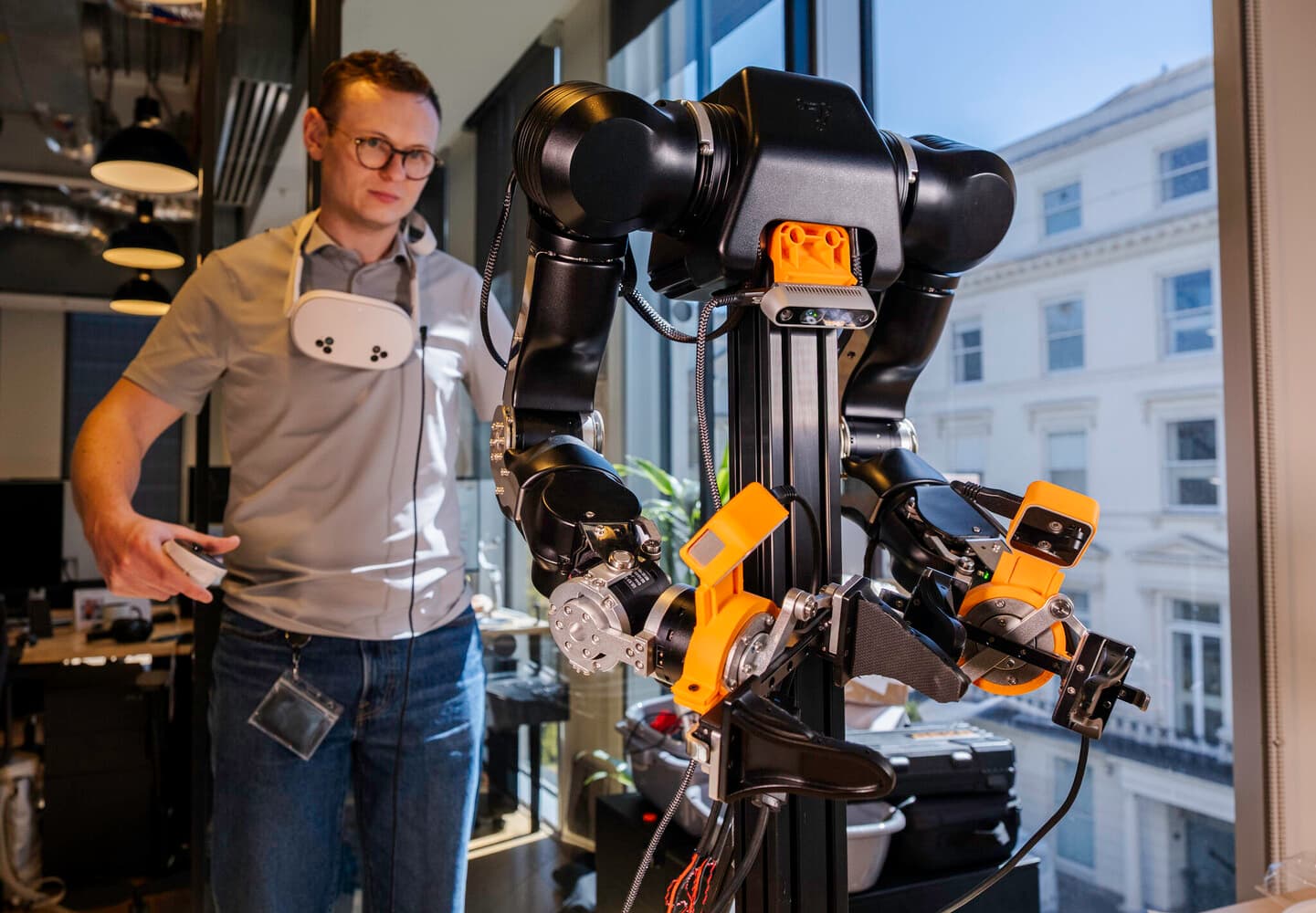
Teleoperation means a person drives the robot in real time while everything is recorded. The interfaces vary by how much precision and how many degrees of freedom the task needs. Leader-follower setups use a smaller replica arm the operator moves by hand, and the real robot mirrors it, intuitive and precise, the workhorse for dexterous tasks. VR controllers track the operator’s hand pose and map it to the end effector. Space mice and 3D pens suit simpler pick-and-place. Teleoperation gloves capture finger motion for multi-finger hands. Alongside teleoperation, kinesthetic teaching, physically guiding the robot while it records, works for slower tasks, and scripted trajectories can seed the easy cases. The rig you choose sets both data quality and how fast you can collect.
Why keeping data trainable is the real work
Recording is the easy 20%. Keeping thousands of episodes trainable is the other 80%. Cameras drop frames; a stream loses sync; an operator fumbles halfway through and the episode should be discarded or trimmed. Objects and camera angles need labeling so you can later filter by them. And you need to know which demonstrations went into which policy version, because when a policy regresses the first question is always “what changed in the data?” Without answers, a dataset degrades into a folder of videos nobody trusts.
This is why data collection and curation belong to the same system. On Neuracore, demonstrations from any supported rig land in one place with their streams aligned and validated on ingest; you can search, tag, and version them, flag bad episodes, and see exactly which dataset version trained a given policy. The same demonstrations then feed imitation and reinforcement learning without moving between tools.
More on building robot skills.
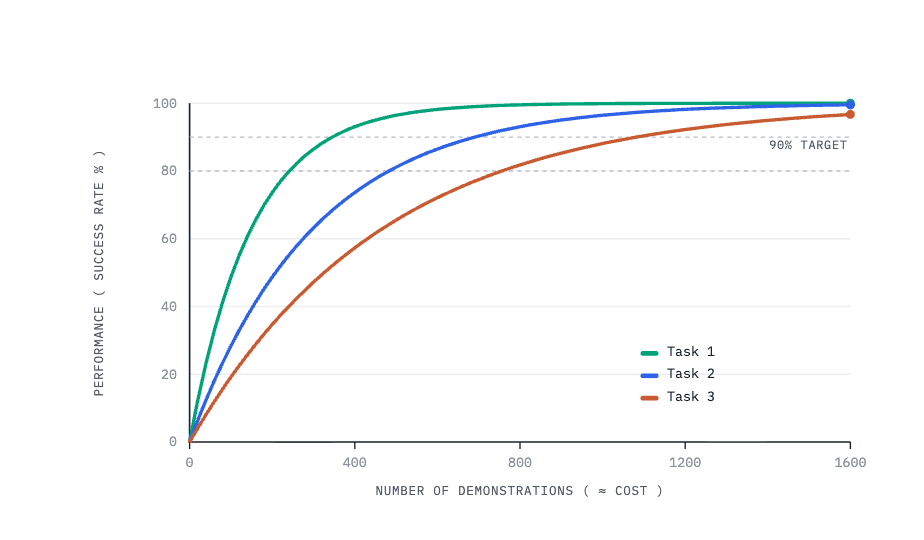
Robot skill scaling laws
How success rate scales with demonstrations, and what a new skill really costs in data and compute.
Read the article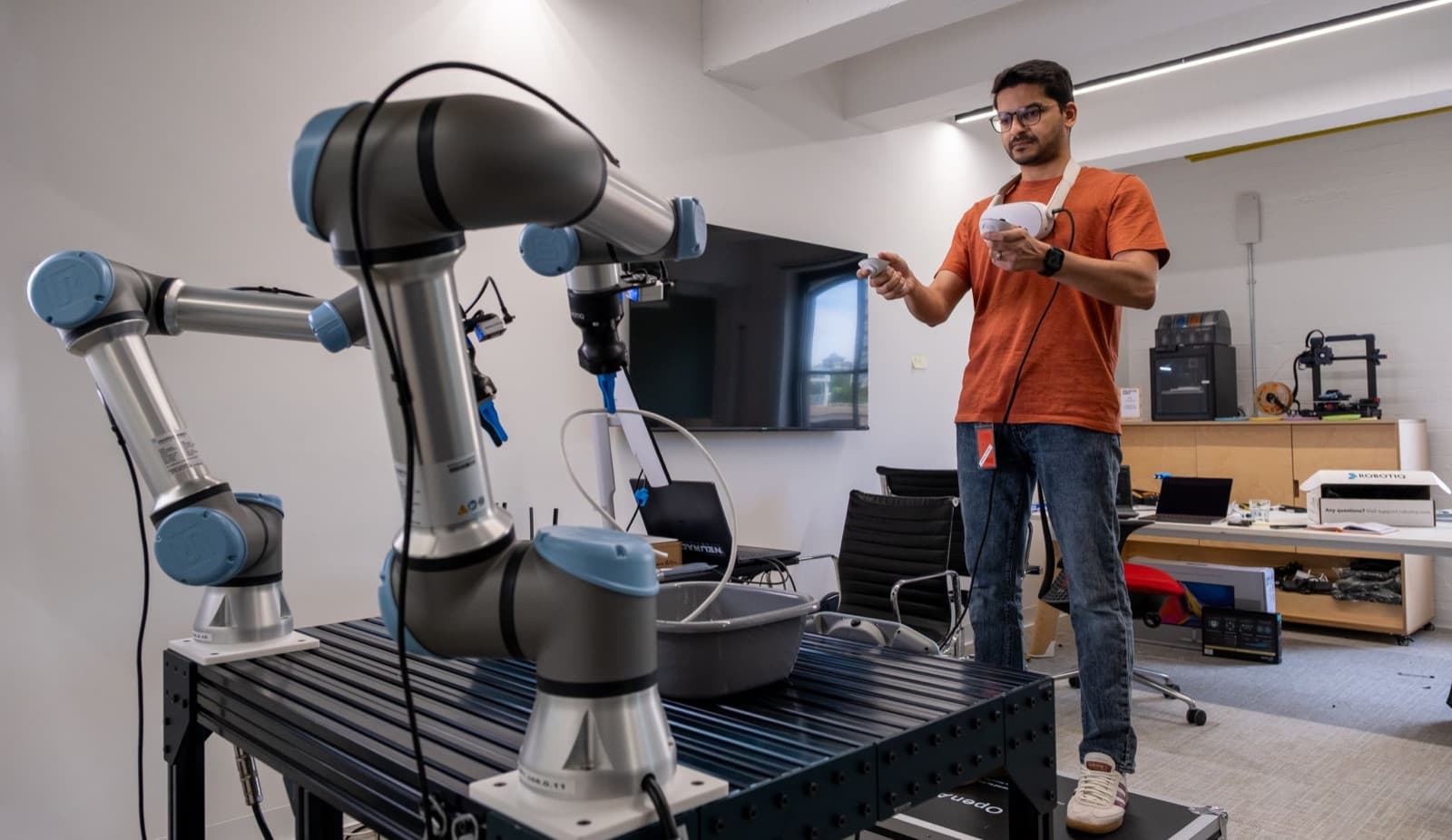
The best teleoperation system for robot data collection
What makes a teleoperation data collection system good, and how the main rigs compare.
Read the article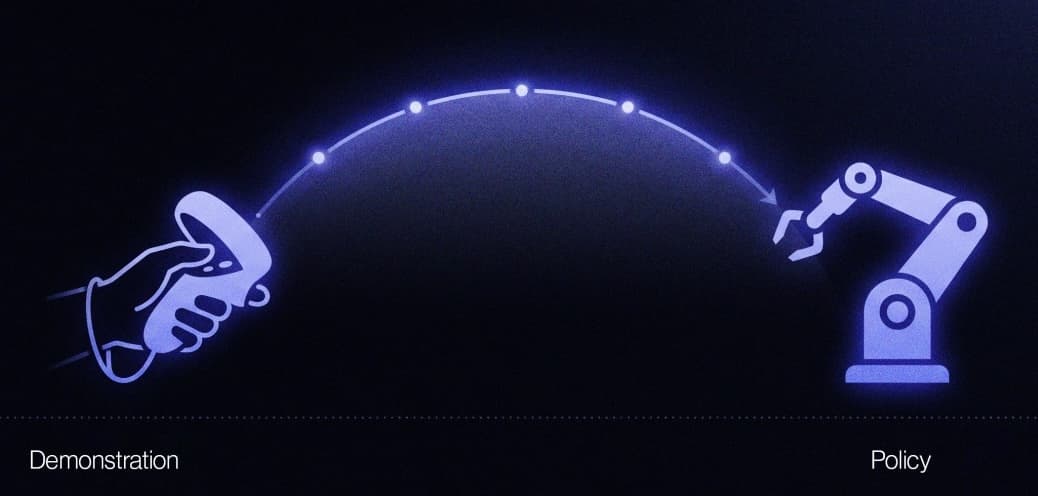
Imitation learning vs. reinforcement learning
When to clone demonstrations, when to reward-optimize, and why most policies use both.
Read the articleCollect once, keep it trainable.
Neuracore ingests demonstrations from any teleoperation rig, aligns and validates the streams, and versions everything for training.