
The best teleoperation system for robot data collection
The best teleoperation system for robot data collection isn't the fanciest input device, it's the one that produces clean, synchronized, trainable teleoperation data at the throughput your project needs.
The short version
- The best teleoperation system for robot data collection is the one whose data actually trains a policy, not the one with the most impressive hardware.
- Judge a teleoperation data collection system on data quality, degree-of-freedom match, throughput, and trainability, not on the input device alone.
- The rig you pick and the platform that turns teleoperation data into robot training should be one pipeline, not two disconnected tools.
Every learned manipulation skill starts as teleoperation data: a human drives the robot through a task while everything is recorded, and those recordings become the demonstrations a policy learns from. So the question “what is the best teleoperation system for robot data collection?” is really a question about data. A rig that feels great to drive but produces misaligned, unlabeled, or low-throughput teleoperation data is a bad data collection system, no matter how good the hardware looks in a demo. Below is what actually separates a good system, and how the common rigs compare.
What makes a teleoperation data collection system “best”
Four things decide whether teleoperation data for robotics is worth training on.
- Data quality and synchronization. A demonstration is several streams, camera feeds, joint positions, gripper state, and the commanded action, that must share a clock. If the action at time t doesn’t line up with the exact observation that preceded it, you’ve recorded subtly mislabeled data. Clean, synchronized capture is the single most important property of any teleoperation data collection system.
- Degree-of-freedom match. The interface has to give the operator enough control authority for the task. A device that can’t express a wrist roll or a delicate finger motion caps the complexity of the skills you can demonstrate at all.
- Throughput. Robot skills scale with the number of good demonstrations, so how many clean episodes an operator can collect per hour, comfortably, without fatigue, directly sets how fast you can build a skill.
- Trainability. The output has to land somewhere it can be searched, tagged, versioned, and filtered. Teleoperation data for robot training is only useful if you can tell which episodes went into which policy.
The main teleoperation systems compared
There is no single winner, the right rig depends on the task’s precision and degrees of freedom, and on your budget for hardware and operator time.
- Leader-follower arms (the approach popularized by low-cost rigs like ALOHA and GELLO) use a smaller replica arm the operator moves by hand while the real robot mirrors it. Intuitive, precise, and excellent for dexterous bimanual tasks, this is the workhorse for high-quality manipulation data, at the cost of a physical replica per robot.
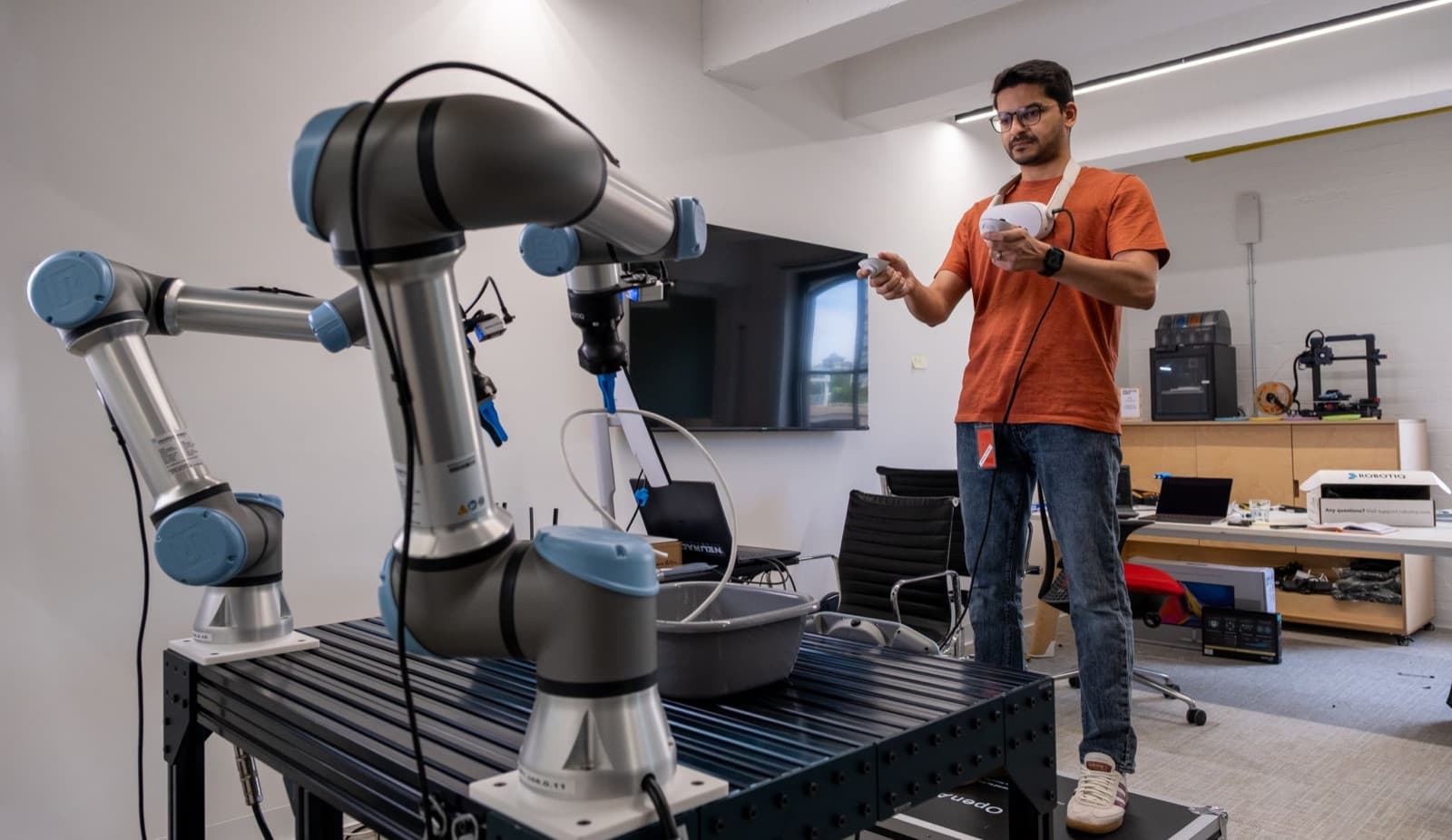
- VR controllers track the operator’s hand pose and map it to the end effector, as in the setup pictured above. They’re cheap, fast to set up, and give full 6-DoF control, which makes them a popular general-purpose choice for robot teleoperation data collection.
- Space mice and 3D pens are inexpensive desktop devices well suited to slower pick-and-place, where full hand tracking is overkill.
- Gloves and exoskeletons capture finger and whole-arm motion for multi-finger hands and the most dexterous tasks, at the top end of cost and setup complexity.
- Kinesthetic teaching, physically guiding the robot while it records, needs no separate interface at all and suits slow, low-force tasks, though it doesn’t capture the operator’s own view.
From teleoperation data to trained robot skills
Collecting teleoperation data is the easy 20%; turning it into a policy is the rest. The demonstrations feed imitation learning, where the policy learns to reproduce the operator’s actions, and often a later reinforcement-learning stage that grinds down the failure modes imitation can’t reach. But between capture and training sits the unglamorous work that makes or breaks a dataset: dropping fumbled episodes, labeling objects and camera angles, keeping streams aligned, and tracking exactly which teleoperation data went into which model version. This is the same problem all robot data collection faces, and it’s where most home-grown pipelines quietly fall apart.
Why the rig and the platform belong together
The best teleoperation system for robot data collection isn’t really a single device, it’s the pairing of a rig that fits your task with a platform that makes the teleoperation data trainable. If those two live in separate tools, the handoff between them becomes the bottleneck: data collection for robotics turns into a folder of videos nobody trusts, and no one can answer “what changed in the data?” when a policy regresses. On Neuracore, teleoperation data from any supported rig, leader-follower, VR, glove, or space mouse, lands in one place with its streams aligned and validated on ingest. You can search, tag, and version episodes, flag bad ones, and trace exactly which demonstrations trained a given policy, so the teleoperation data you collect today is still worth training on months from now.
More on building robot skills.
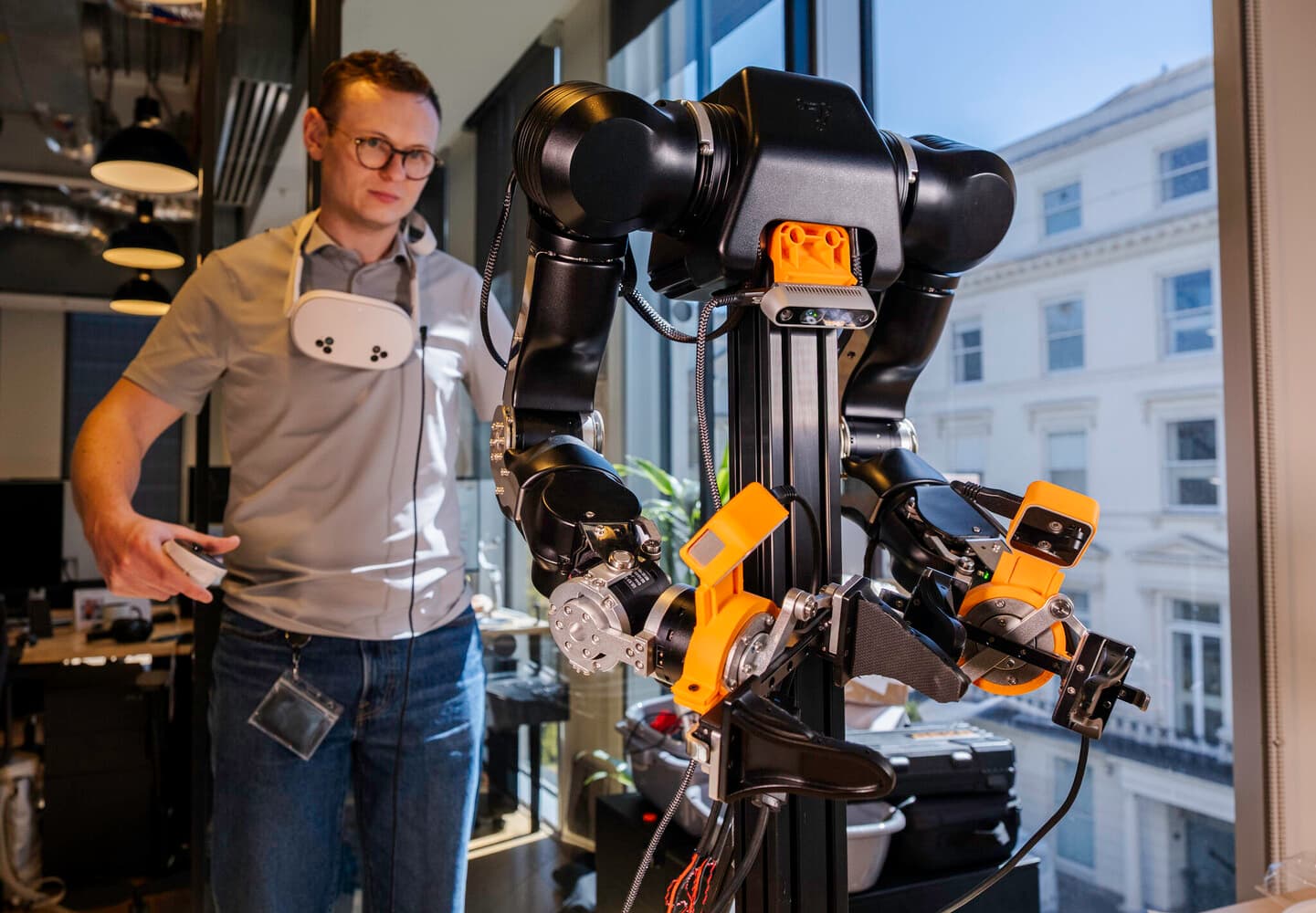
How robot data collection actually works
Teleoperation rigs, what a demonstration actually records, and how to keep the data trainable.
Read the article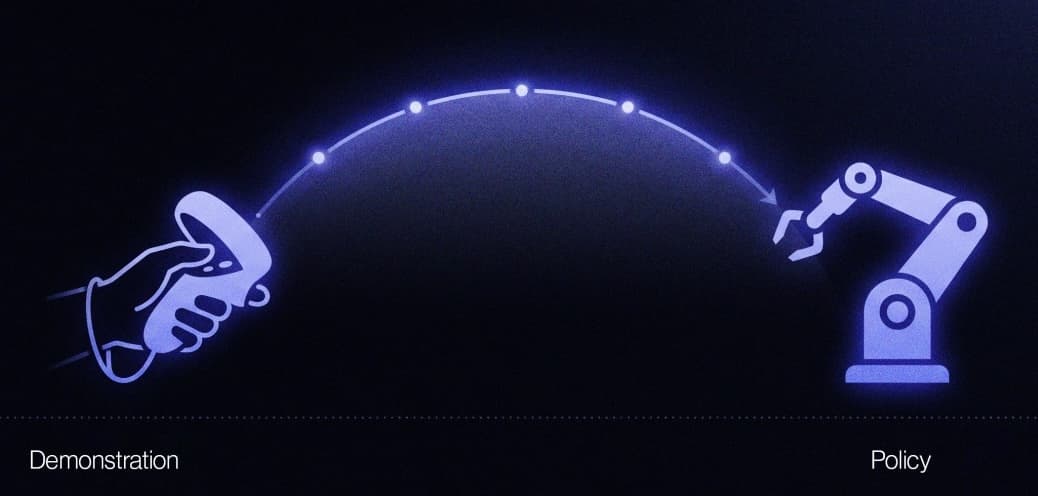
Imitation learning vs. reinforcement learning
When to clone demonstrations, when to reward-optimize, and why most policies use both.
Read the article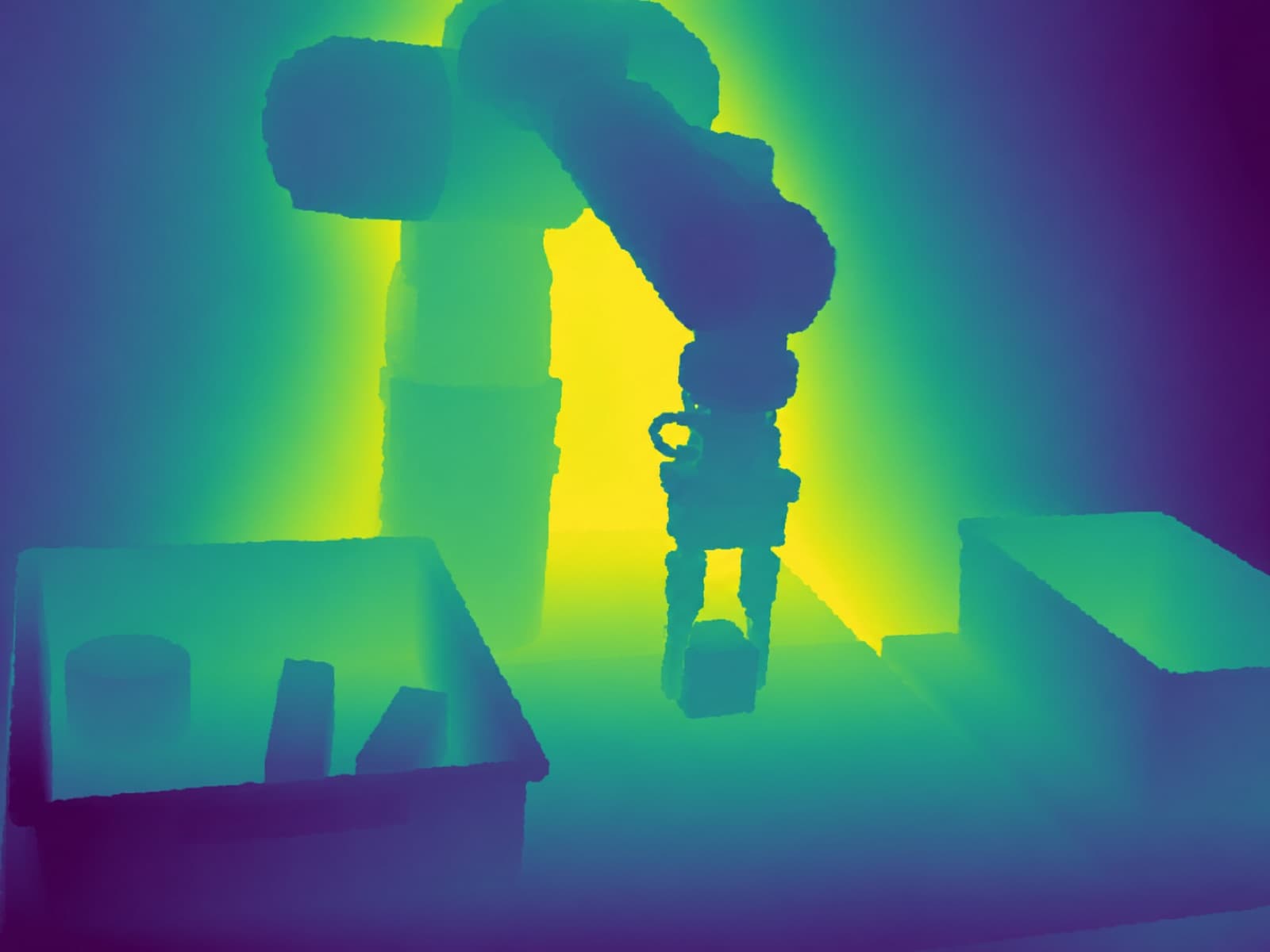
RGB vs. depth cameras for robot skill training
What RGB and depth cameras each capture, where each fails, and which your policy actually needs.
Read the articleTurn teleoperation data into robot skills.
Neuracore ingests teleoperation data from any rig, aligns and validates the streams on the way in, and versions everything for imitation and reinforcement learning.