
 Mobile manipulator deployment
From a new client task to a deployed skill in days, not months.
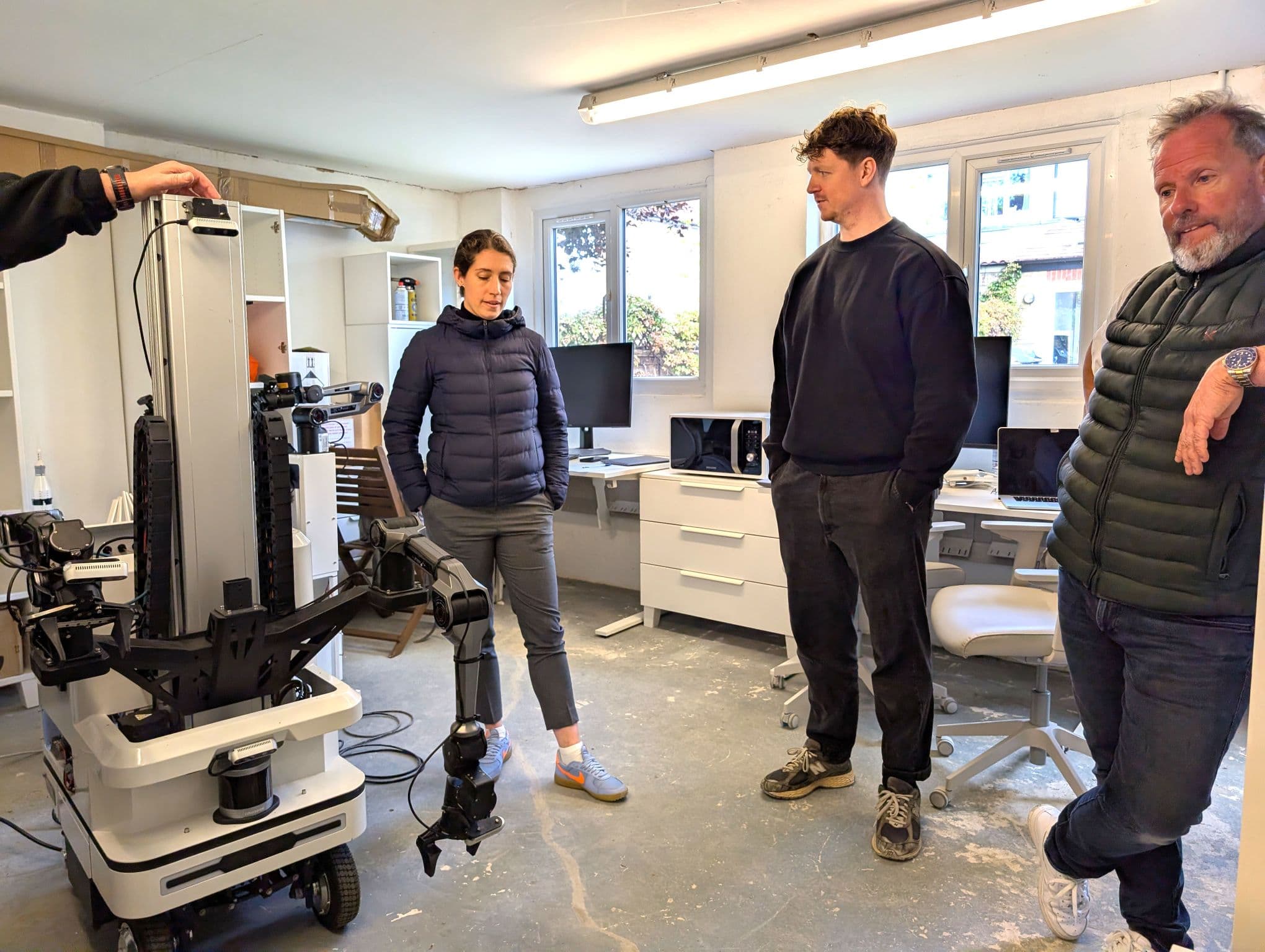
AIRA deploys mobile manipulators, not humanoids, onto real manufacturing and supply-chain lines, with a plan to manage tens of thousands of them across verticals. Every deployment already means custom hardware and a fresh set of manipulation tasks. On Neuracore, AIRA collects, curates, trains, and deploys the policies for those tasks on one platform, without building any of the machine-learning infrastructure themselves.
The economics leave no room for a software detour.
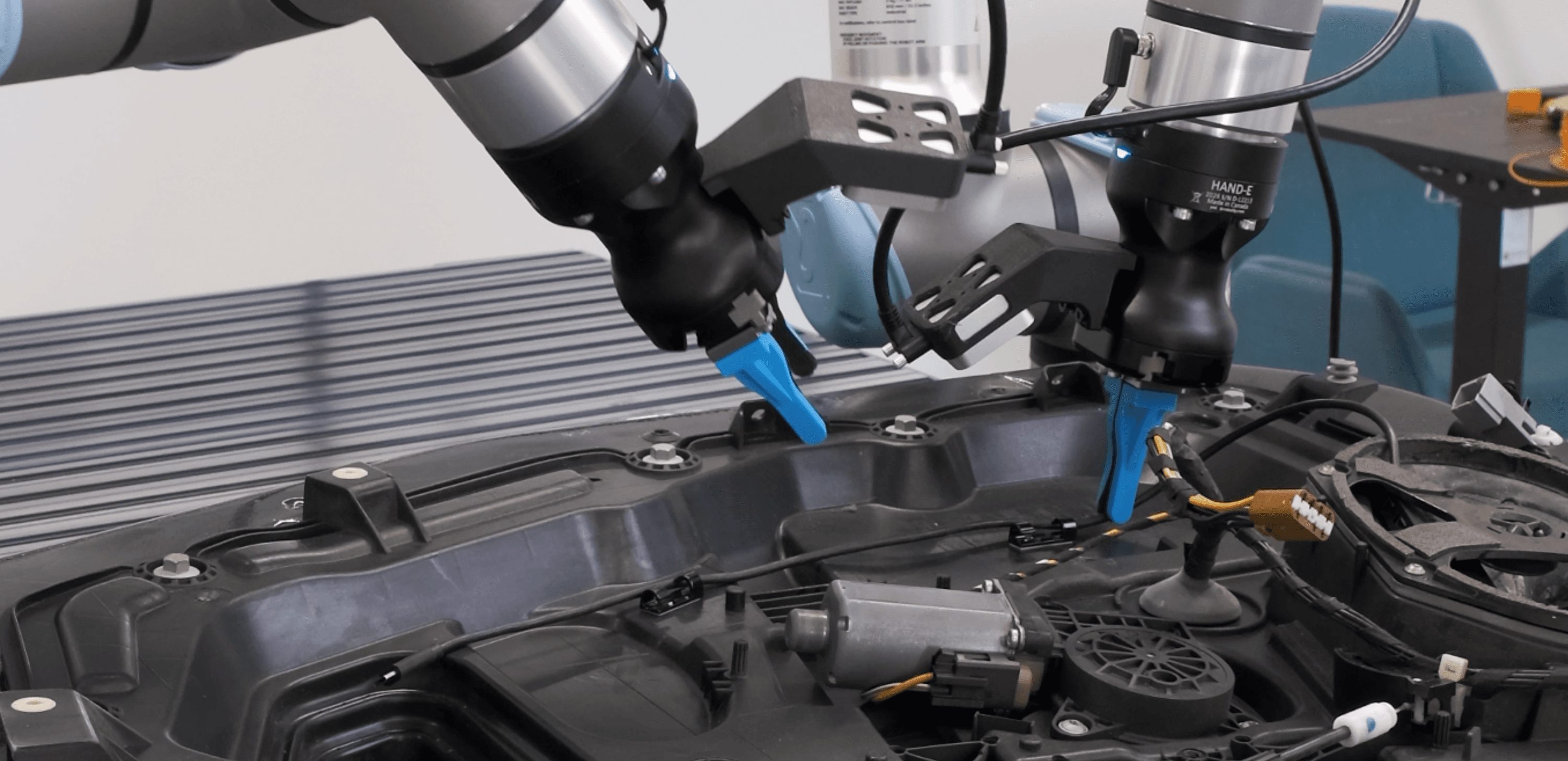
AIRA's entire thesis is cost discipline. To deploy robots at scale, the all-in cost has to land near a thousand dollars a month per unit, and every deployment already spends its budget on hardware. Their current automotive supply-chain pilot needed a custom arm gantry, custom grippers, F8 filtration, rewiring, and new antennas before a single task could be taught. Adaptation like that is where a mobile manipulator earns its place over a humanoid, but it also means there is nothing left over to spend on infrastructure.
Hand-scripting each task doesn't scale across verticals and part revisions. AIRA wanted to learn manipulation skills from demonstration instead, but standing up their own data, training, and deployment stack was a multi-million-dollar build that would have broken the very economics the business exists to protect.
One platform, one loop per task.
AIRA adopted the full Neuracore lifecycle as their standard playbook for every deployment. The same four steps run identically whether the manipulator is unloading automotive parts or seating connectors, so the team spends its effort on the hardware and the task, not on the pipeline behind them.
Collect on the real cell
Operators teleoperate the task on the target robot, logging synchronized video, proprioception, and actions straight to the cloud.
Learn moreCurate before training
The team reviews episodes, flags fumbled takes, and cuts a clean versioned dataset, catching quality issues before they waste a run.
Learn moreTrain a policy
A managed GPU run produces a manipulation policy for the task, with no infrastructure for AIRA to provision or maintain.
Learn moreDeploy to the line
The policy runs in a real-time control loop on the cell; failures trace back to the data and feed the next iteration.
Learn morePeople get excited about the robot, but the robot isn't the product. It's a tool to deliver an outcome for the customer. Neuracore is how we turn a new task into a deployed skill in days, so the economics of a real deployment actually hold up.
 Tom LipinskiFounder, AIRA
A repeatable path that scales with the fleet.
Moving from scripting to learned skills turned AIRA's hardest software bottleneck into a routine. Every new task reuses the same collection rig, curation tooling, and training and deployment path, so the marginal cost of the next skill keeps falling, exactly the direction the unit economics need to go. When a policy underperforms on a new part, the team traces it to the exact demonstrations, adds a handful more, and retrains, instead of rewriting control code.
Because the platform absorbs the machine-learning work, AIRA's engineers stay focused on the hardware adaptation and the tasks themselves, the work that actually makes a deployment pay. That's the loop AIRA intends to run tens of thousands of times over, deploying mobile manipulators across verticals to take on manual labour and help re-shore manufacturing at a cost that works.
Have a task you'd script today?
See how the same loop would turn it into a learned skill on your own robots.